
← Back to Mynzo Talks
Technology
Averting Our Eyes
By Mynzo team Updated 5 min read
The data is relentless, the warnings urgent, and the images increasingly difficult to ignore. And yet, for many, the crisis exists in a strange psychological limbo, acknowledged theoretically but sidelined in practice. This can’t be simply classified as ignorance alone, it shows us something more human, and more complicated.
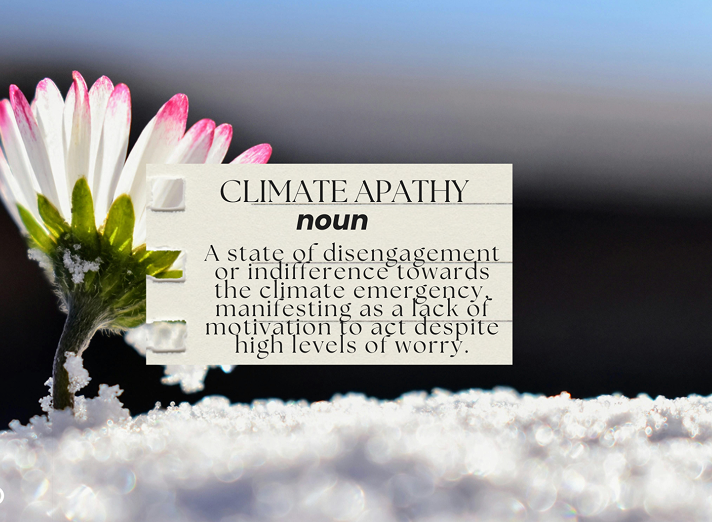
There’s no shortage of information about climate change. The data is relentless, the warnings urgent, and the images increasingly difficult to ignore. And yet, for many, the crisis exists in a strange psychological limbo, acknowledged theoretically but sidelined in practice. This can’t be simply classified as ignorance alone, it shows us something more human, and more complicated. Psychologists have long understood that when a threat feels too vast, too abstract, or too distant, the mind deploys quiet defenses. Climate change is all three. It unfolds over decades, spans continents, and resists simple narratives of cause and effect. Faced with such scale, people often default to what feels manageable: daily routines, immediate concerns, the reassuring rhythms of normal life. There’s also the problem of diffusion. When responsibility is shared by billions, it can feel owned by no one. Individuals may ask, consciously or not: What difference could I possibly make? The question becomes a permission slip for inaction. Then there’s emotional fatigue. Constant exposure to dire predictions can overwhelm rather than motivate. The result is not urgency, but numbness — a quiet retreat from discomfort. In this sense, climate apathy is less a failure of caring than a coping mechanism. And yet, beneath the surface, concern persists. Surveys consistently show that large majorities of people recognize climate change as a serious issue. The gap lies between belief and behavior, between knowing and doing. Bridging that gap requires a shift, not in information, but in framing. Research suggests that people respond more readily to stories than statistics, to tangible actions over abstract goals, to collective momentum rather than individual burden. When climate action is presented not as sacrifice but as participation, in cleaner cities, healthier communities, more resilient systems, it becomes easier to engage. Equally important is visibility. Social norms are powerful: when people see others taking action, even in small ways, it signals that change is both possible and underway. What once felt like a solitary effort begins to resemble a shared movement. The same psychology that allows us to look away can also help us lean in. Humans are adaptable, social, and deeply responsive to meaning. When climate action is made visible, relatable, and grounded in everyday life, it ceases to be an abstract crisis and becomes something closer to a collective project. The challenge, then, is not only to sound the alarm, but to make the response feel human-sized and, crucially, within reach.
Ready to monitor your forest assets?
Discuss satellite monitoring, field validation and reporting for your project.
Get Started