
← Back to Mynzo Talks
Research
Cities That Forgot How to Breathe
By Mynzo team5 min read
A city's lungs aren't made of concrete—they're made of open spaces, trees, and the movement of fresh air.
Cities are often described as living systems. They grow, evolve, and adapt to the needs of the people within them. Yet unlike living organisms, many cities have been designed to maximize efficiency while leaving little room for one essential function: breathing.
A city's ability to breathe is not metaphorical. It depends on the movement of air through streets, open spaces, parks, rivers, and tree-lined corridors. These natural pathways help disperse heat, reduce pollution, and create healthier environments. When they disappear, the effects are gradual but profound.
As buildings grow taller and development becomes denser, airflow slows. Heat becomes trapped between concrete surfaces, pollutants linger for longer, and neighborhoods become increasingly vulnerable to rising temperatures. The issue is not simply a lack of green space, it is the loss of the natural systems that once allowed cities to regulate themselves.
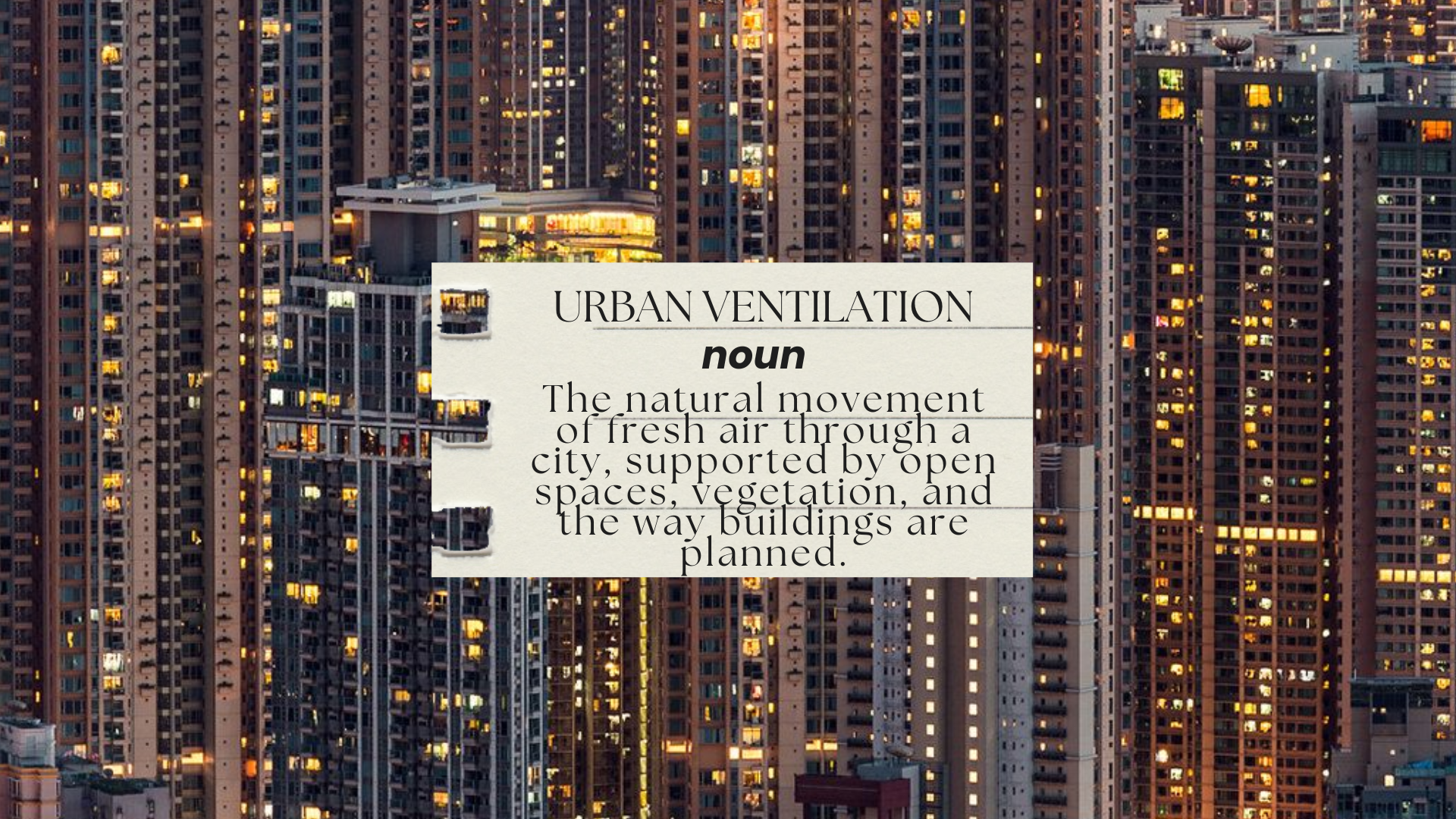
This is where the idea of urban ventilation becomes important. Good urban design is not only about roads, transport, and infrastructure. It is also about creating space for air to circulate, for trees to cool their surroundings, and for nature to remain an active part of the city's function rather than an afterthought.
The cities that perform best under climate stress are rarely those with the tallest skylines. They are often the ones that preserve parks, protect waterways, maintain connected green corridors, and recognize that natural systems are just as valuable as engineered ones. These elements work together to improve public health, reduce heat, and make cities more resilient.
Perhaps the future of urban living is not about building more, but about building differently. A city that can breathe is a city that can adapt, recover, and thrive. In the years ahead, the measure of a successful city may not be how efficiently it grows, but how well it leaves room for nature to keep it alive.
Ready to monitor your forest assets?
Discuss satellite monitoring, field validation and reporting for your project.
Get Started