
← Back to Mynzo Talks
Research
Life Without Trees
By Mynzo Team 5 min read
Trees are easy to overlook in cities—until they’re gone. Remove them, and the shift isn’t just visual. Cities begin to overheat, air becomes heavier, and everyday life grows more difficult to navigate. What we often treat as optional greenery is, in reality, critical infrastructure.
Trees are easy to overlook in cities. They sit quietly along roads, fill parks, and soften the edges of concrete and steel. Over time, they’ve come to be seen as aesthetic, pleasant but optional. Something that makes cities look better, not something they depend on.
But this framing is fundamentally incomplete.
Trees are not decorative elements. They are active systems, regulating temperature, managing water, filtering air, and shaping how cities function at a basic level. Remove them, and the change is not subtle. It is structural.
A city without trees doesn’t just lose greenery. It begins to overheat.
Without shade and evapotranspiration, surfaces absorb and retain more heat. Roads, buildings, and open spaces warm faster and stay hot longer. What was once moderated by natural systems becomes directly exposed. The city doesn’t just feel warmer, it behaves differently.
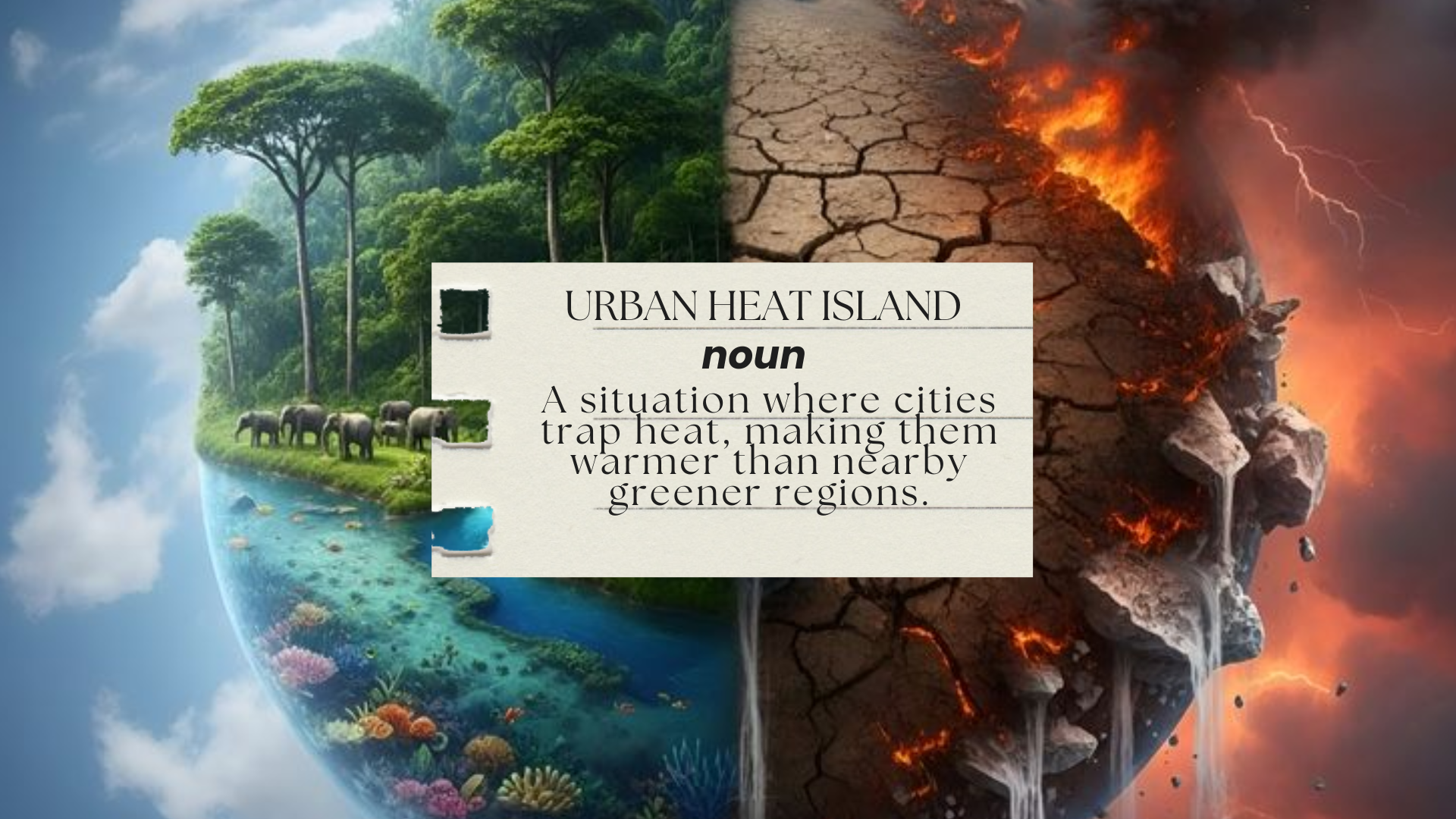
This shift is captured in what we call the urban heat island effect. Cities, built largely from concrete and asphalt, accumulate heat throughout the day and release it slowly at night. In the absence of trees, there is little to interrupt this cycle. The result is a sustained increase in temperature that reshapes daily life, making nights warmer, heatwaves harsher, and recovery slower.
But temperature is only the beginning.
As cities heat up, energy demand rises. Air conditioning becomes less of a comfort and more of a necessity. Air quality declines, water systems strain, and the overall resilience of the environment weakens. What begins as the absence of trees expands into a cascade of interconnected impacts.
And these impacts are not evenly distributed.
Areas with fewer trees are often the same areas with fewer resources—less access to cooling, weaker infrastructure, higher exposure. In these spaces, the absence of trees is not just environmental. It becomes social, economic, and deeply unequal.
Reintroducing trees, then, is not about beautification. It is about restoring balance.
Because the presence of trees does something fundamental: it allows cities to regulate themselves. To cool, to absorb, to adapt. Without them, cities don’t just lose shade they lose one of their most essential systems for sustaining life.
And in a warming world, that is not a minor loss. It is a defining one.
Ready to monitor your forest assets?
Discuss satellite monitoring, field validation and reporting for your project.
Get Started