
← Back to Mynzo Talks
Research
Nature: The Original Innovator
By Mynzo Team5 min read
The next great breakthrough may not begin in a laboratory. It may begin with a simple observation of nature. After all, the greatest innovator the world has ever known has been here all along.
When we think of innovation, we imagine research labs, artificial intelligence, and groundbreaking inventions. Rarely do we picture a forest, a bird, or a termite mound.
Yet the world's oldest and most successful innovator has never built a laboratory. Nature has been designing, testing, and refining solutions for over 3.8 billion years. Every organism alive today is the result of countless experiments carried out through evolution, where only the most efficient designs survived.
Take a closer look at the natural world and you'll find extraordinary engineering everywhere. Birds have perfected the art of flight, spiders produce silk that is incredibly strong for its weight, termites regulate the temperature of their homes without electricity, and lotus leaves naturally stay clean by repelling water and dirt. These are not coincidences. They are solutions shaped by time.
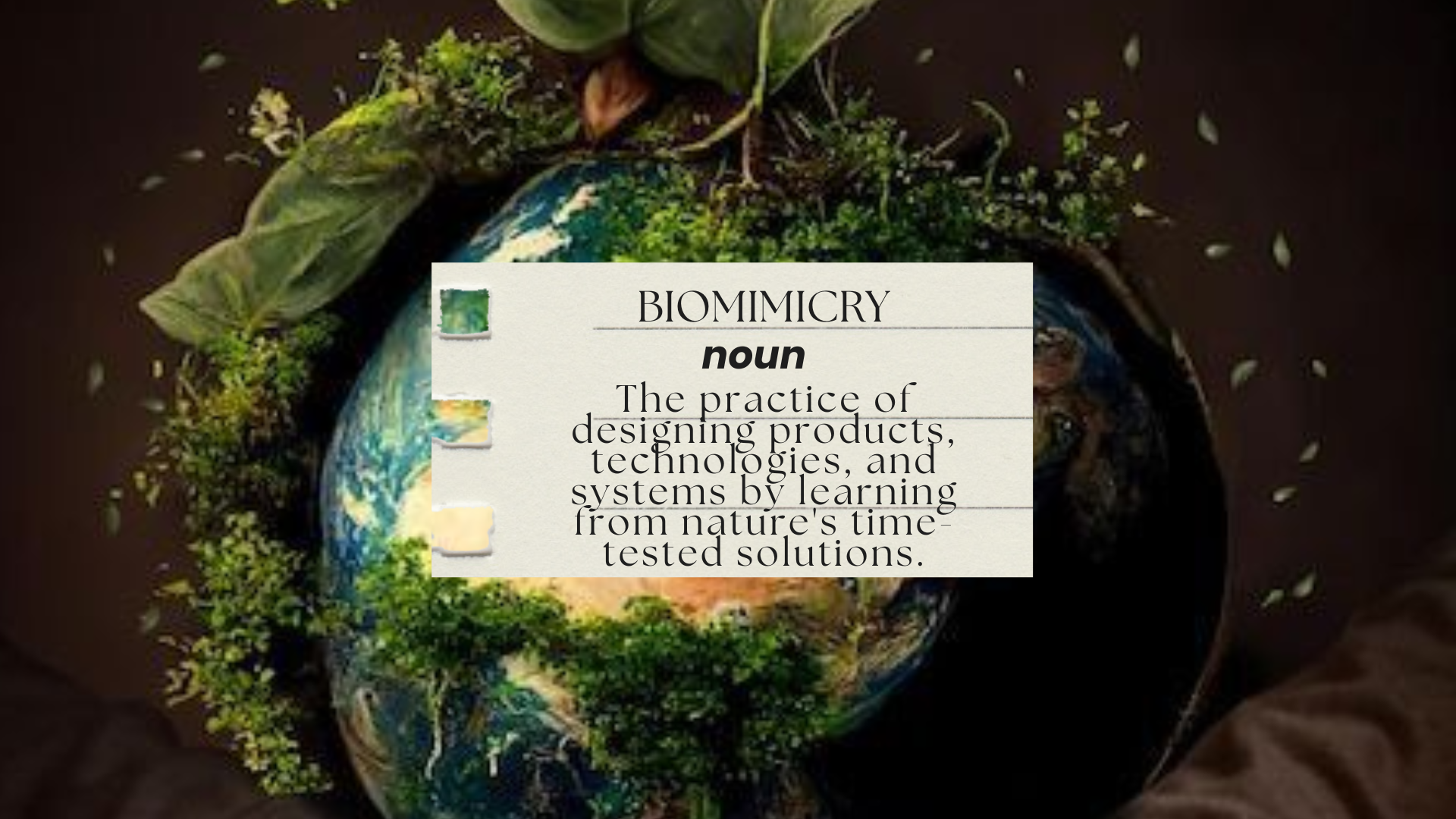
This idea has inspired a field known as biomimicry, where scientists, engineers, and designers study nature to solve human challenges. Instead of asking, "What can we invent?" biomimicry asks a different question: "How has nature already solved this?" One of the most famous examples is Japan's Shinkansen bullet train. Engineers redesigned its nose after studying the kingfisher's beak, creating a train that was quieter, faster, and more energy efficient. Buildings inspired by termite mounds now reduce the need for air conditioning, proving that nature often provides elegant solutions to modern problems.
Nature also offers lessons that go far beyond technology. Every ecosystem operates with remarkable efficiency. Nothing is wasted. Fallen leaves become fertile soil, nutrients are continuously recycled, and every organism contributes to a larger system. These same principles are now influencing sustainable architecture, circular manufacturing, product design, and urban planning.
As the world faces climate change, resource scarcity, and growing environmental challenges, innovation will become more important than ever. But perhaps innovation isn't only about creating something new. Sometimes it is about paying closer attention to what already exists. The forests, oceans, deserts, and grasslands around us are filled with ideas that have been quietly working for millions of years.
The next great breakthrough may not begin in a laboratory. It may begin with a simple observation of nature. After all, the greatest innovator the world has ever known has been here all along.
Ready to monitor your forest assets?
Discuss satellite monitoring, field validation and reporting for your project.
Get Started