
← Back to Mynzo Talks
Research
Rethinking Water in Cities
By Mynzo Team 5 min read
What if cities could absorb water instead of fighting it? Blue-green infrastructure makes that possible.
Water has always shaped cities, but modern urban design has largely treated it as something to control rather than integrate. Rain is diverted, rivers are constrained, and surfaces are sealed. The result is a system built on removal efficient in theory, but increasingly fragile in practice.
This fragility reveals itself in extremes. When rainfall is scarce, cities face shortages and depleting groundwater. When it is abundant, the same systems fail under pressure, leading to flooding and disruption. The issue is not simply the presence of water, but the inability of urban environments to absorb, store, and respond to it.
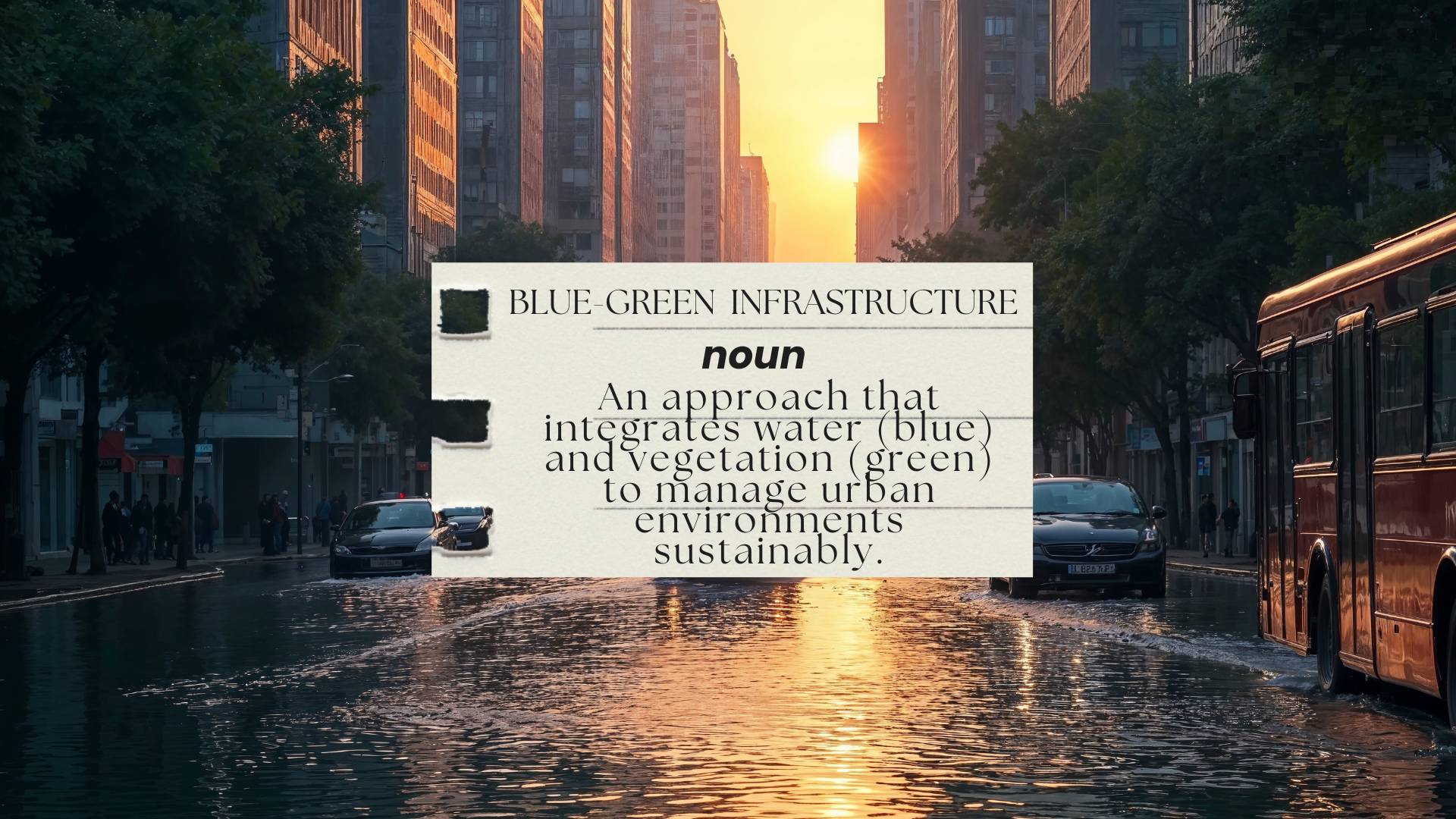
Blue-green infrastructure offers a different approach. It reframes water not as a threat, but as a resource to be managed within the ecosystem. By integrating natural elements, such as vegetation, soil, and water bodies into urban planning, cities begin to work with natural cycles rather than against them.
These systems function by slowing water down. Parks absorb rainfall, wetlands store excess water, and permeable surfaces allow it to seep into the ground. Instead of overwhelming drainage networks, water is distributed, retained, and gradually released. This shift transforms cities from rigid, impermeable spaces into adaptive systems capable of responding to variability.
The implications extend beyond water management. Blue-green infrastructure reduces urban heat, improves air quality, and supports biodiversity. More importantly, it introduces a different philosophy of design, one that prioritizes resilience through integration rather than control through separation.
As climate pressures intensify, this shift becomes less optional and more necessary. The resilience of cities will depend not on how quickly they can remove water, but on how effectively they can live with it.
In this context, rethinking water is not a technical adjustment, it is a fundamental redefinition of how cities function.
Ready to monitor your forest assets?
Discuss satellite monitoring, field validation and reporting for your project.
Get Started