
← Back to Mynzo Talks
Research
The Illusion of Clean
By Mynzo Team5 min read
Clean spaces don’t always mean less impact. Often, they reflect systems that shift environmental costs elsewhere.
Clean has become a visual standard. A clean street, a neatly packaged product, a space free of visible waste, these signals shape how we perceive order and responsibility. If something looks clean, it feels managed, controlled, and without consequence.
But this perception is often incomplete.
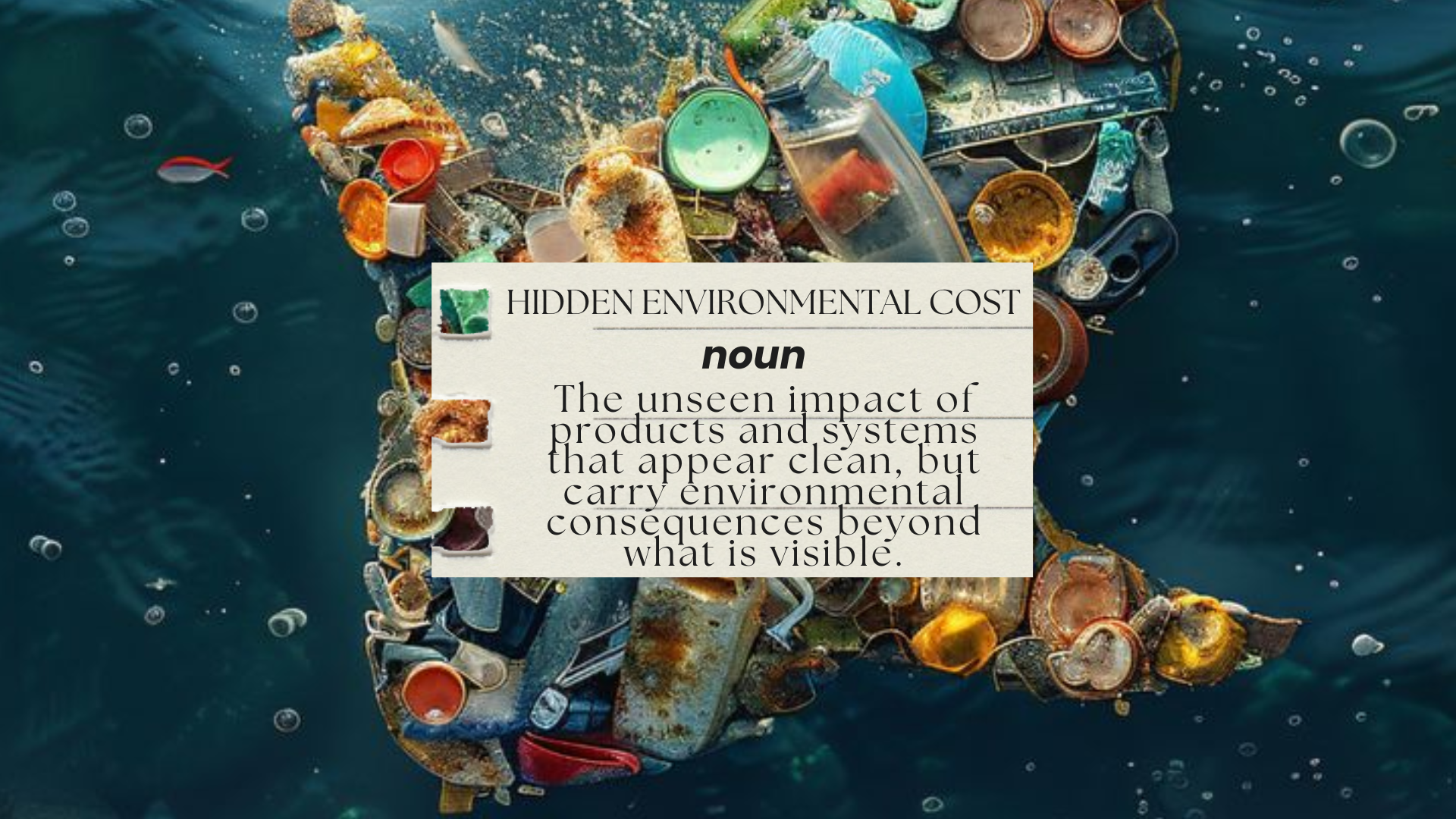
Environmental impact rarely disappears. It shifts. Waste is moved from homes to landfills. Emissions disperse into the atmosphere. Resources are extracted far from where products are consumed. The result is a system where cleanliness is maintained locally, while impact is distributed elsewhere.
This creates an illusion.
When waste is no longer visible, it becomes easier to assume it no longer exists. When production is distant, it becomes harder to connect products to the resources they require. The cleaner something appears, the less we tend to question what lies behind it.
Yet every product carries a history. Water used in its creation, energy consumed in its production, and waste generated along the way. These elements remain part of its footprint, even if they are not immediately seen.
The challenge, then, is not cleanliness itself, but how it is defined. If clean only refers to what is visible, it ignores the broader systems that sustain it. True understanding requires looking beyond the surface, recognizing that absence of evidence is not absence of impact.
Because in the end, what we don’t see doesn’t disappear. It simply becomes easier to overlook.
Ready to monitor your forest assets?
Discuss satellite monitoring, field validation and reporting for your project.
Get Started