
← Back to Mynzo Talks
Research
The Power of Urban Forests
By Mynzo Team Updated 5 min read
Urban forests are more than green spaces—they are critical infrastructure shaping how cities handle heat, air quality, and flooding. This piece explores why trees may be one of the most powerful tools for urban resilience.
Cities are often understood as spaces of efficiency: dense, fast-moving, engineered for human activity. But increasingly, they are also becoming the frontlines of the climate crisis. Rising temperatures, deteriorating air quality, and intensifying floods are not a distant threat, they are daily realities in urban life.
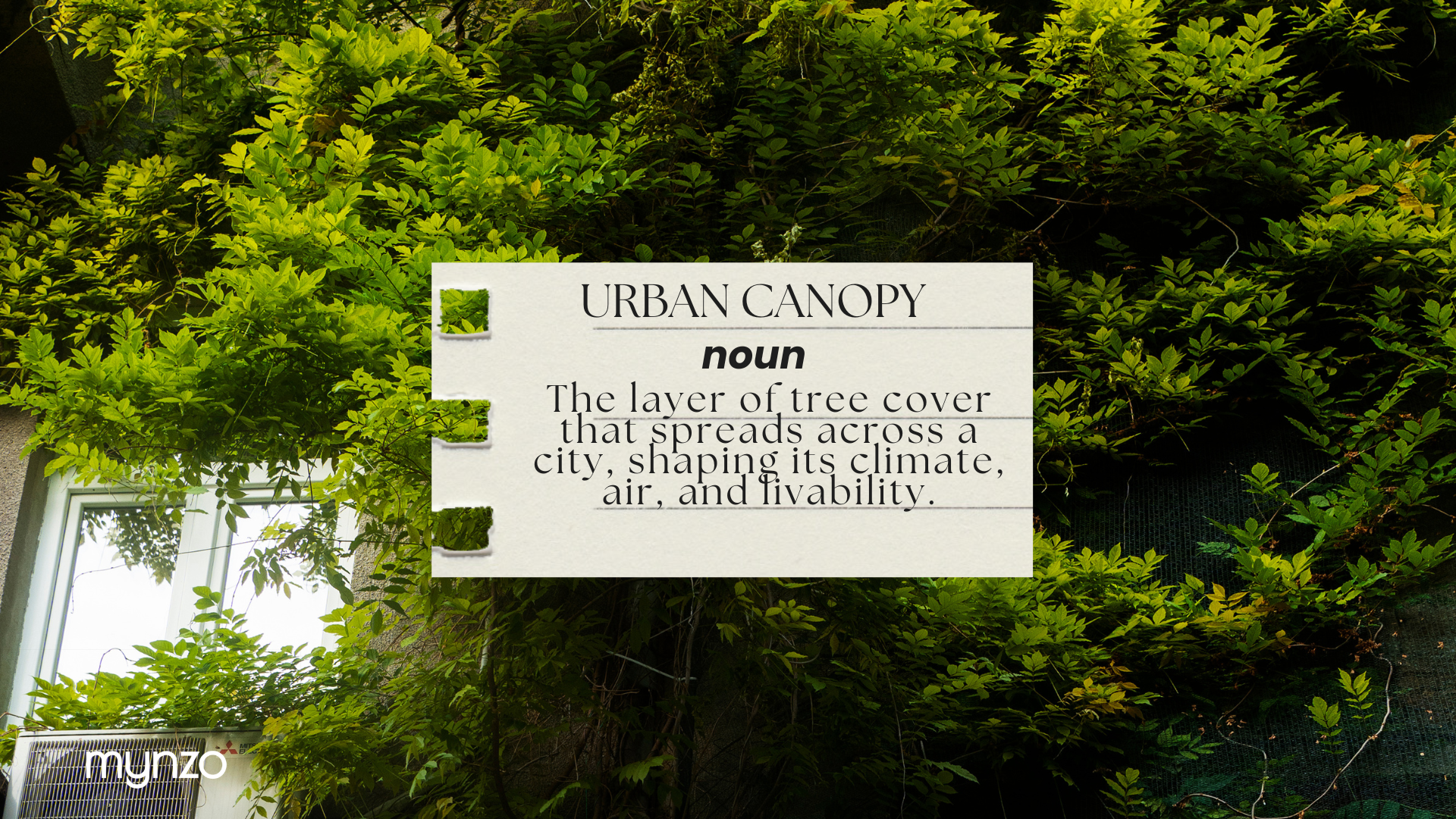
At first glance, trees in cities may appear ornamental, additions meant to soften concrete edges. But this framing understates their function. Urban forests operate as distributed ecological systems, influencing temperature, air composition, water flow, and even human health. A well-established canopy can reduce ambient temperatures significantly, creating microclimates that counter the urban heat island effect. In cities where heatwaves are becoming more frequent and severe, this is not a marginal benefit-it is critical.
Their role extends beyond temperature. Trees actively filter particulate matter, improving air quality in environments where pollution levels often exceed safe limits. At the same time, their root systems absorb rainwater, reducing surface runoff and mitigating flooding, a growing concern in rapidly urbanizing regions.
Yet, the benefits of urban forests are not distributed equally. In many cities, canopy cover reflects existing inequalities. Wealthier neighborhoods tend to have more trees, more shade, and consequently, lower temperatures. Meanwhile, more vulnerable communities often experience higher exposure to heat and pollution, reinforcing cycles of environmental inequity.
There is also a deeper shift embedded in the idea of urban forests. They represent a move away from purely extractive models of development toward regenerative ones. Instead of building over natural systems, cities begin to integrate with them. Growth is no longer defined only by expansion, but by restoration.
The power of urban forests lies precisely in this distributed nature. They are not a singular fix, but a system that scales organically, adapting to the needs of each city. As climate pressures intensify, the question is no longer whether cities can afford to invest in urban forests. It is whether they can afford not to. Because in the end, the resilience of our cities may depend less on what we build, and more on what we choose to grow.
Ready to monitor your forest assets?
Discuss satellite monitoring, field validation and reporting for your project.
Get Started