
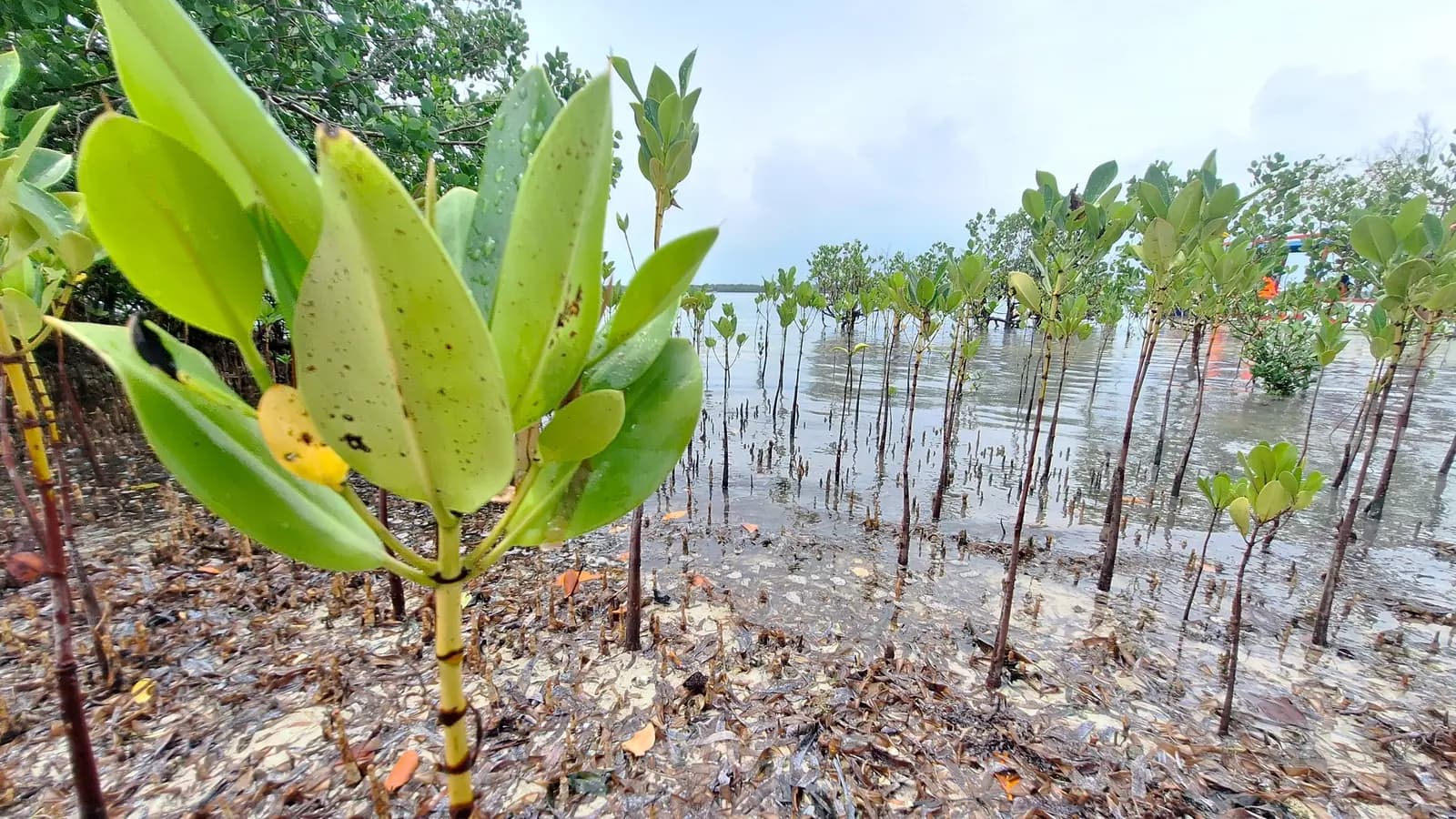

Mangrove Restoration: Methods, Examples and Monitoring
Plan mangrove restoration around tides, sediment and local use. Compare Indian and Indonesian examples, restoration methods and useful monitoring records.
Mangrove restoration helps a degraded mangrove ecosystem recover by addressing the conditions that prevent recovery. Those conditions can include blocked tidal exchange, unsuitable sediment, continued damage or unresolved land use. Planting may be part of the work, but the starting point is a site assessment and an agreement with the people who use and manage the coast.
The Global Mangrove Alliance guidelines place ecological conditions, community needs and long-term management within the same project. A planting count alone cannot show whether that project is working.
Define the site and the problem before choosing a method
Draw the proposed boundary and identify what is there now: surviving mangroves, former ponds, tidal channels, mudflats, salt marsh or other habitat. Use dated imagery, field observations and local accounts to understand what changed. An area without trees is not automatically land that should become a mangrove forest.
Write the problem as a testable statement. “A bund may be restricting tidal drainage in the former pond” is more useful than “this area needs greening”. The first statement gives the survey team something to investigate. If the suspected obstruction is not the cause, the intervention should change.
Record the intended outcome separately: restoring tidal exchange, supporting native recruitment or recovering a particular habitat function. The habitat mapping guide explains how to specify boundaries, classes and field checks without treating a map as the whole ecological assessment.
Agree access, local use and responsibilities
Identify landholders, customary users, fishing access, aquaculture activity and the agencies responsible for the site. Discuss who would gain or lose access if channels, pond boundaries or vegetation changed. The Mangrove Action Project field manual includes land tenure and land use in site selection, alongside the conditions needed for natural recruitment.
A useful meeting record names the decision, the people involved, unresolved concerns and the person responsible for follow-up. It should also identify who will maintain the work after initial funding ends. “Community consulted” is too vague to resolve a later disagreement about a fishing route or a pond boundary.
Check tidal exchange, elevation and sediment
Compare the proposed site with nearby functioning mangroves in a similar setting. Examine how water enters, how it drains and where it remains trapped. Include elevation, inundation, salinity and sediment conditions in the assessment. A single visit at low tide cannot describe the flooding pattern over time.
IUCN’s guidance on mangrove sediments explains why both sediment shortage and excessive deposition can cause problems. Seedlings need a stable substrate, while changes in rivers and coastal structures can alter the supply. Adding more seedlings does not correct an eroding or unsuitable surface.
Any proposed channel work needs site-specific design and the relevant permissions. A canal layout that helped one degraded wetland is not a construction specification for another coast. Keep a record of the observations that support the design, the uncertainty that remains and the conditions under which the team would revise it.
Which mangrove restoration method fits?
The Kenya Forest Service restoration guidance separates removing barriers to regeneration from planting. The following comparison is a planning aid, not a species or engineering prescription.
| Approach | When to investigate it | Evidence to check first |
|---|---|---|
| Protect natural regeneration | Young native mangroves are arriving and establishing, but disturbance continues. | Recruitment, survival and the pressure that needs to be removed. |
| Restore ecological conditions | Altered drainage, tidal connections or other barriers appear to prevent recovery. | Hydrology, elevation, sediment, nearby seed sources and effects on adjacent users. |
| Targeted planting | Suitable conditions are established but natural recruitment remains insufficient for the agreed objective. | Why recruitment is limited, locally appropriate species and a plan to assess establishment. |
Smithsonian’s account of ecological mangrove restoration describes the risks of treating a tidal habitat like an ordinary tree plantation. Rows of one species can survive poorly when the water regime is wrong. Species choice and nursery supply come after understanding the site.
What Pichavaram and Demak show
Pichavaram, Tamil Nadu: restoring tidal movement
A 2017 Ministry of Home Affairs planning manual, page 72, describes work by MSSRF, the Tamil Nadu Forest Department and local users at Pichavaram. Channels reconnected a degraded area to tidal water, improving soil moisture and reducing salinity before planting. The account reports increased mangrove cover in the tested area. It is a historical project example, not a current assessment of the entire Pichavaram wetland.
Demak, Indonesia: making space for natural recovery
In its April 2021 report from Demak, Wetlands International describes converting degraded fishponds into areas where sediment and mangroves could return. This approach was introduced in locations with less severe erosion. Pond owners participated alongside livelihood support, and community groups monitored and protected the recovering greenbelt.
The useful comparison is the decision behind each intervention. Pichavaram addressed water movement in a degraded area; the Demak example combined pond conversion, sediment accumulation and local agreements. Neither provides a universal planting density, recovery deadline or cost per hectare.
An illustrative site decision record
Imagine a team reviewing a former pond beside an existing mangrove creek. This is a teaching example, not a Mynzo project or a completed ecological diagnosis.
| Observation | Question still open | Next record needed |
|---|---|---|
| Water remains inside the pond after the nearby creek level falls. | Is restricted drainage the main cause, or are other site conditions involved? | Comparable water-level observations inside and outside the pond, with dates and tide conditions. |
| Young mangroves occur beside the connecting creek. | Can propagules reach and establish within the proposed restoration area? | Mapped recruitment observations and a check of connections and barriers. |
| Fishers use a path across the pond boundary. | Would the proposed work change safe access? | An agreed access arrangement recorded before the design is finalised. |
The first review should assign an owner and a decision date to each open question. If drainage is restored but recruitment remains absent, investigate the cause before ordering replacement seedlings. Keep the original observations so the later decision can be explained.
Measure recovery as well as completed work
NOAA’s restoration monitoring framework distinguishes implementation from effectiveness. A completed intervention and a functioning habitat need different evidence. Apply that distinction to the project’s own objectives:
- Work completed: record the location, date, design and maintenance of the intervention.
- Physical response: revisit the water or sediment condition the work was meant to change.
- Vegetation response: track native recruitment, species composition and survival using a consistent survey method.
- Use and management: record agreed access, continuing pressures and actions taken when problems recur.
Keep replacement plantings separate from the original cohort when reporting survival. Compare visits made under suitable, recorded conditions, and explain any change in method. A greener image may justify a field visit; it does not by itself confirm species recovery or a new carbon removal.
Use the restoration monitoring plan to organise repeat visits and follow-up responsibilities. For carbon terminology, read what blue carbon measures.
Common planning questions
How much does mangrove restoration cost?
A useful budget identifies site assessment, community engagement, design and permissions, works, maintenance and monitoring. State the area, intervention and time covered before comparing costs. A nursery price per seedling does not describe the cost of restoring a wetland.
Can mangroves recover without planting?
Yes, where suitable conditions and sources of propagules allow natural recruitment. Check what prevents that process and whether removing the barrier is sufficient. Some sites still need planting; the decision should follow the assessment.
How long does restoration take?
There is no single completion date for all outcomes. A channel may be reopened on a known day, while vegetation establishment and habitat recovery require repeated observations. Define the milestone being reported and continue to check whether the change persists.
Sources checked on 31 October 2026. The site decision record is illustrative. Case descriptions retain their source dates and do not represent Mynzo delivery claims.
Choose evidence for ecological recovery
Compare habitat, species and condition measurements, then adapt the monitoring brief to your site.
Explore biodiversity measurement methods