
Miyawaki Forests: Method, Benefits and Evidence
How dense native planting works, what research supports, and how to assess a Miyawaki forest proposal without relying on growth or carbon promises.
A Miyawaki forest is a densely planted patch of native woody vegetation established using an approach developed by Japanese botanist Akira Miyawaki. It combines a locally appropriate species mix, soil preparation, close planting and establishment care. It can be an option for some small urban sites, but rapid early growth does not establish that a planting has acquired the ecology of an old forest.
The useful question is what the method can achieve on a particular piece of land. A neighbourhood habitat patch, a shaded walking route and a fruit garden have different requirements. Start with that purpose before selecting a planting method.
How does the Miyawaki method work?
The approach begins with local vegetation: which woody species belong in the area's forest community, and which suit the actual site? Native to a country is a broader description than native to a particular ecological region. A standard shopping list copied between cities misses that distinction.
ICLEI South Asia's guidance describes investigating vegetation and site conditions, raising suitable seedlings, preparing soil and planting a mixture. Modern projects use different adaptations. Some described in the guidance plant roughly three or four saplings per square metre; that describes their practice, not a universal prescription.
Closely spaced plants are intended to develop a dense stand. Mulch and early watering or weed management support establishment. Soil preparation should respond to actual conditions rather than assuming every site requires imported soil or the same amendments. A planting specification should explain each input and its purpose.
During a visit, distinguish the number planted from the number alive. Also distinguish a fast-growing stem from a functioning community of plants, animals and soil organisms. Those are different observations, and they need different records.
Compare choices against the job the land must do
This is a planning comparison, not a performance ranking. Conventional planting covers many methods, from street trees to woodland establishment; treating all of them as one weak alternative produces misleading comparisons.
| Approach | Possible purpose | Decision to resolve |
|---|---|---|
| Dense native patch | Create a compact area for observing woodland establishment. | Can the site support dense woody vegetation and its care requirements? |
| Spaced trees with accessible ground | Provide trees alongside paths, seating or other uses. | Where will mature crowns, roots and shade fit those uses? |
| Recovery of existing vegetation | Retain and improve habitat already present. | What is limiting recovery, and is planting necessary? |
For example, imagine a school considering a small unused corner. If the aim is ecological learning, a dense patch with an observation edge might fit. If the aim is lunchtime shade for a whole class, the design must also provide accessible space where people can sit. The same planting count cannot tell you whether either design meets its purpose. This is an illustrative decision exercise, not a project result.
What does the evidence support?
A February 2025 English local-authority case study reports 16 adapted Miyawaki plots alongside comparison plots across four authorities. The pairs used the same species mix and nursery sources and received equal maintenance for three years. Reported average survival was 79% in the Miyawaki plots and 47% in the comparisons. Initial establishment costs were higher for the dense plots, while reported costs per surviving tree were lower.
That is useful evidence from those difficult urban sites, which experienced the 2022 drought. It does not establish the same survival advantage in every climate, nor prove a long-term carbon advantage. The case study itself describes the need for much longer observation.
A systematic review published in the 2026 volume of the Journal of Applied Ecology found that many widely repeated Miyawaki benefits lacked robust comparative testing. It found limited support for faster growth and insufficient evidence for broad claims about rapid maturity, self-sufficiency, biodiversity superiority and greater carbon sequestration. This identifies an evidence gap; it does not demonstrate that every dense planting fails.
Read an impressive comparison by asking: compared with what, measured when, and measured how? Height, survival, canopy cover, species observations and carbon stocks are separate outcomes. A percentage attached to one cannot be reused for another.
Earthwatch Europe's 2025 monitoring report illustrates this distinction. It records several kinds of ecological and social observations. Its microclimate analysis did not find a simple temperature or humidity pattern across its young forests, although wind shelter and reported thermal comfort showed different results. Calling all three findings a fixed cooling benefit would erase those differences.
Miyawaki planting in India
On 18 June 2024, India's National Highways Authority announced proposed Miyawaki planting on more than 53 acres around Delhi-NCR. This documents institutional adoption and proposed locations. An announcement is not a survival survey or an independent assessment of cooling, biodiversity or carbon storage.
For an Indian school, housing community or public-space project, ask for the botanical basis of the species list, the planting season, the expected water demand and the people responsible after the planting event. Do not transfer an English trial's results to a hot, dry site or a monsoon-influenced site without local evidence.
Also establish what the land already contains. Our afforestation and reforestation guide explains why land history matters. More woody cover is not automatically the right objective for every ecosystem.
A practical review before planting
The Forest Research Urban Tree Manual puts site constraints, long-term tree selection, procurement and establishment care into one process. Its UK guidance supports the questions below; it is not an India species recommendation.
- Purpose: write one outcome that the community can check, such as keeping an accessible observation area beside the planting.
- Existing conditions: record vegetation, soil constraints, water availability, services, access and current users.
- Design: request botanical names, the reason for each species, expected mature form and an explanation of density.
- Care: assign watering, inspections, replacement decisions and a budget, including school holidays or staff changes.
- Evidence: photograph fixed views and record survival by species, maintenance inputs and relevant habitat observations over time.
Agree what happens when conditions differ from the plan. A calendar promise that care stops in year three is less useful than a recorded review of whether the planting is established. Keep the original planting register so replacements are not accidentally reported as survival.
Questions readers ask
Can I use the method for a small fruit garden?
A public gardener discussion raises exactly this issue for a 16-square-metre space. The planning question is access: can people reach plants for harvesting and care as they grow? Specify food production, access and mature size before deciding that a dense woodland method fits the garden.
Does a Miyawaki forest grow ten times faster?
There is no defensible universal multiplier. Ask which species, age, site, measurement and comparison produced the figure. A local height result cannot establish faster recovery of every ecological function.
Is Miyawaki planting the same as urban rewilding?
Dense planting is a specific intervention. Urban rewilding asks broader questions about ecological processes, existing habitat, connectivity and people's use of space. A project may include planting, but the labels are not interchangeable.
Continue with the three types of biodiversity to understand what a planting might support, or ecosystem services to distinguish habitat observations from benefits to people.
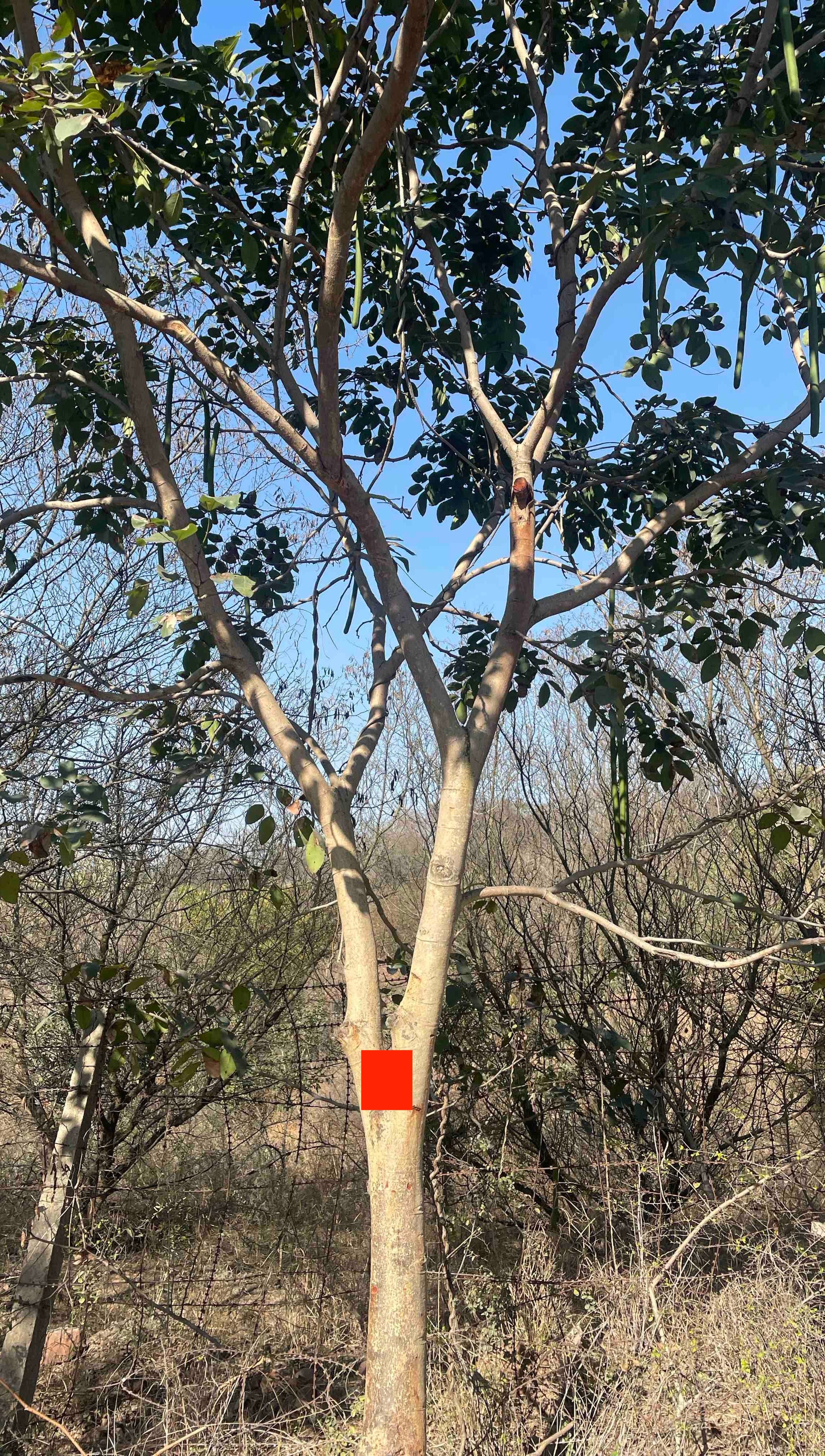
Sources checked on 8 October 2026. The cover photograph is illustrative and does not document a Miyawaki project.
What should you measure after planting?
Follow survival, vegetation condition and site pressures over time.
Read the restoration monitoring guide